News
Heart Palpitations in Everyday Life: What Causes Those Extra Beats

Melanie Al Tikriti, BSc ·
A brief interruption with a big impact
A sudden flutter in the chest, a strong thud, or the feeling that your heart skips a beat—heart palpitations often cause anxiety. Many people are startled in that moment, even though the cause is harmless in most cases. Nevertheless, any irregularity in the heartbeat feels intense, since the heart plays a central role in our sense of security. Precisely because the heartbeat normally occurs unconsciously, any deviation is immediately noticed and often perceived as threatening.
Medically speaking, these are usually what are known as extrasystoles. In this case, the heart beats briefly outside its normal rhythm. This extra signal is often interpreted as a “skipped beat,” although in reality an additional heartbeat occurs, followed by a brief pause. This pause causes the next beat to be perceived as particularly strong. Heart skips are particularly noticeable during quiet moments—such as when lying down or falling asleep—since there are no distractions.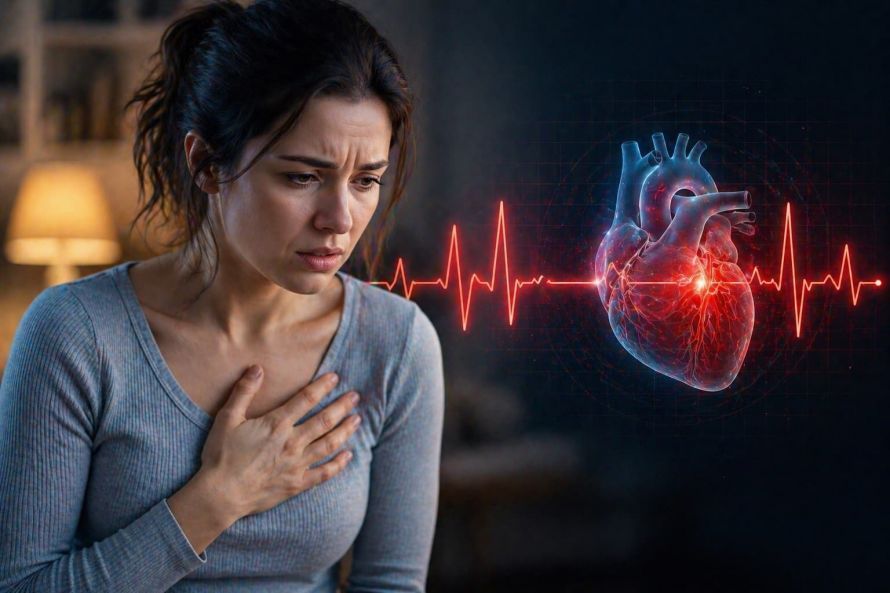
This is what heart fluttering feels like
The perception of heart fluttering can vary greatly and depends heavily on individual sensitivity. Some people feel only a slight flutter, while others perceive a distinct skipping or an unpleasant pounding in the chest. The sensation often occurs suddenly and disappears just as quickly, making it difficult to assess the situation:
- Irregular heartbeat or “skipping a beat”
- A brief pause followed by a strong beat
- Heart palpitations at rest or before falling asleep
- A feeling of pressure in the chest
- Accompanied by restlessness or mild dizziness
In addition to physical sensations, psychological reactions also play a major role. After the first few episodes, many people pay closer attention to their heartbeat, which makes the sensation feel even more intense. This can create a cycle of monitoring and tension that exacerbates the symptoms.
Common triggers in everyday life
Heart palpitations are often caused by harmless factors that temporarily disrupt the delicate balance of the heart’s rhythm. Modern daily life, with its stresses, frequently contributes to this:
- Stress and internal tension
- Caffeine, alcohol, or nicotine
- Lack of sleep and physical exhaustion
- Dehydration
- Hormonal changes
Emotional situations such as excitement, anxiety, or intense joy can also temporarily cause the heart to skip a beat. The body reacts to internal or external stimuli by releasing stress hormones that affect the heartbeat. In many cases, this is a natural reaction that is not a sign of illness.
A Balanced Heart Rhythm
The heart normally functions in a finely tuned rhythm controlled by electrical impulses. These impulses originate in the sinoatrial node and spread throughout the heart. They ensure that the heart muscle contracts evenly and that blood is pumped effectively throughout the body.
If additional electrical impulses occur, this process is briefly disrupted. Extrasystoles can originate in either the atria or the ventricles. In most cases, these extra beats are harmless. However, the key factors are how frequently they occur and whether they are accompanied by other symptoms. An occasional skipped beat is usually not a cause for concern, whereas frequent or bothersome symptoms that could indicate heart muscle disease should be investigated more thoroughly.
Diagnosis: When Further Evaluation Is Recommended
Even though heart palpitations are often harmless, they understandably cause anxiety. A medical evaluation can help reduce this anxiety and identify possible causes. An examination is particularly advisable if the symptoms occur regularly or change:
- Very frequent or persistent heart rhythm disturbances
- Dizziness, shortness of breath, or chest pain
- Heart palpitations during physical exertion
- Known heart conditions
An ECG or Holter monitor is often used for diagnosis. These tests allow the heart rhythm to be monitored over an extended period and any abnormalities to be analyzed in detail. In some cases, further tests are necessary to rule out structural changes in the heart. Cardiologists are the appropriate specialists to consult for this.
Treatment and Possible Measures
The treatment of heart palpitations depends heavily on the cause. In many cases, no medical intervention is necessary; instead, it is sufficient to adjust one’s lifestyle and reduce stressors. The goal is to relieve the strain on the heart and restore balance in the body:
- Reducing caffeine, alcohol, and nicotine
- Stress reduction through targeted relaxation
- Getting enough sleep and regular rest
- A balanced diet to support the cardiovascular system
- Treating any underlying medical conditions
Medications are usually only used when symptoms are severe or an underlying condition is present. In cases of severe arrhythmias, catheter ablation may also be considered as a treatment option. In most cases, however, the focus is on stabilizing one’s lifestyle.
Everyday tips for a steady heart rhythm
- Make sure to stay well-hydrated
- Incorporate regular exercise into your daily routine
- Consciously reduce caffeine intake
- Incorporate relaxation exercises into your daily routine
- Make sure to get enough sleep
- Identify and reduce sources of stress
- Pay attention to your body without focusing on it too much
Conclusion: Put heart palpitations into perspective and stay calm
Heart palpitations can often be unsettling, but in most cases they are harmless. The causes are frequently rooted in everyday life and can be positively influenced through targeted changes. A medical evaluation provides peace of mind and helps rule out serious conditions such as coronary heart disease. By better understanding your body and consciously managing stress, you can help your heart return to a more stable rhythm and, over the long term, gain greater peace of mind and confidence in your body.
Share this article
Verified expertise
Recommended specialists
11 specialists
11 results

Dr. med. Patrick Müller
Recklinghausen









Professor Frank Breuckmann
Kitzingen



1 / 2
News
Read next
- News
Scabies: A contagious skin disease that is easily treatable
Oct 26, 2026
Severe itching and minor skin changes should be taken seriously
Read more - News
Heat Rash: What's Behind the Itchy Blisters
Oct 23, 2026
Heat Rash: Heat and Sweat Can Disrupt the Skin's Balance
Read more - News
Enlarged Prostate – When Medication Is Sufficient and When Surgery Is Recommended
Oct 21, 2026
Why Many Men Ignore Urinary Problems for Too Long
Read more