Cholangitis refers to inflammation of the bile ducts, which can be acute or chronic. Cholangitis is an inflammation that affects the intra- and extrahepatic bile ducts and can impair the function of the liver and bile ducts. Acute cholangitis is usually caused by a bacterial infection, often associated with gallstones or choledocholithiasis. Typical symptoms include fever, jaundice, and pain in the right upper abdomen, known as Charcot’s triad.
In addition to the acute form, there is primary sclerosing cholangitis (PSC), a chronic inflammatory disease characterized by narrowing of the bile ducts. Primary biliary cholangitis, also known as PBC, primarily affects the small bile ducts within the liver. Depending on the cause of the cholangitis, bacterial cholangitis, secondary sclerosing cholangitis, or tumor-related narrowing may be present.
Early diagnosis and treatment are crucial to preventing complications such as liver cirrhosis or the need for a liver transplant.
Function of the Gallbladder and Bile Ducts
The main function of the gallbladder is to store bile produced by the liver. When food is ingested, bile is released through the bile duct into the duodenum. There, the bile emulsifies the chyme.
Causes of Bile Duct Inflammation (Cholangitis)
Obstructions in the flow of bile can allow bacteria from the duodenum to enter the bile ducts, leading to inflammation. This condition is known as acute cholangitis. It causes fever and can be life-threatening. If left untreated, the bacteria can spread to the liver.
The most common pathogens are E. coli and enterococci, followed by
- Klebsiella,
- Enterobacter, and
- Clostridium perfringens.
The most common causes of blocked bile ducts or impaired bile flow are
- gallstones,
- strictures,
- tumors, or
- parasitic infestation.
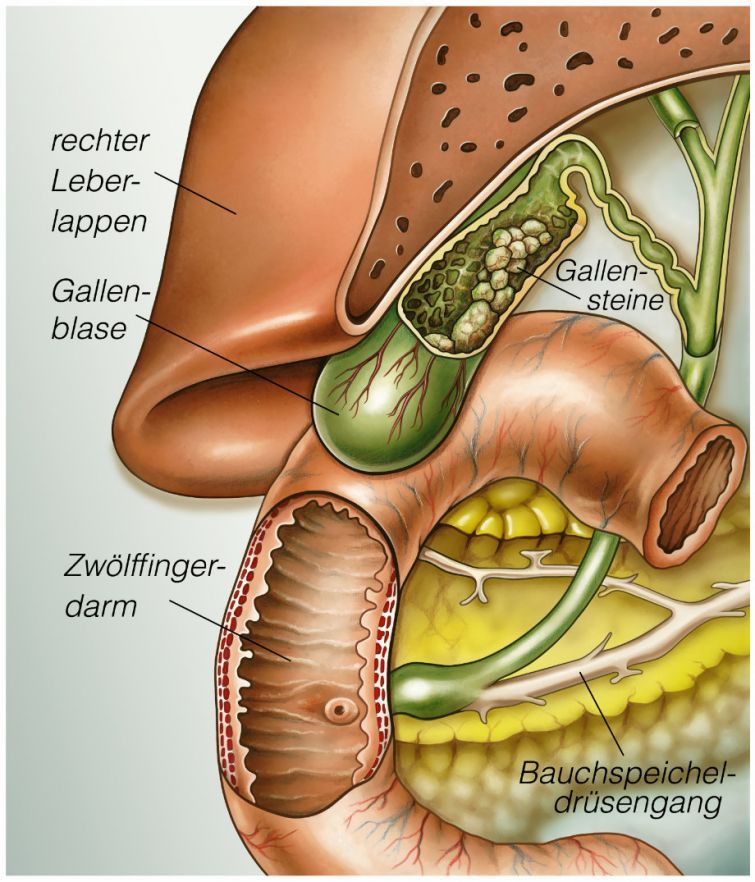
Gallstones in the bile ducts are often the cause of cholangitis © Henrie | AdobeStock
In rare cases, cholangitis can become chronic without an infectious cause. This is referred to as primary sclerosing cholangitis. It leads to chronic bile stasis and ultimately to scarring and destruction of the liver. The cause of this form of the disease is unknown. It is believed to be caused by an autoimmune disorder.
Symptoms of Bile Duct Inflammation
The main symptoms of acute cholangitis are
- a high fever and chills lasting several days, accompanied by
- constant pain in the right upper abdomen.
- After a few days, the skin turns yellow.
Primary sclerosing cholangitis is characterized by a gradual, often asymptomatic course over the course of years.
- Fatigue,
- a feeling of pressure,
- pain in the right upper abdomen, and
- mild fever
are the main symptoms.
How is cholangitis diagnosed?
Laboratory tests
A blood test can reveal elevated bile markers and signs of inflammation, such as
- an elevated white blood cell count,
- an increased erythrocyte sedimentation rate, and
- an increase in C-reactive protein (CRP) levels
be detected.
Ultrasound examinations
Gallstones are often the cause of inflammation of the bile ducts. They can be detected through an ultrasound examination.
During this painless and straightforward examination, the doctor palpates
- gallbladder,
- bile ducts, and
- the liver and
- usually also the pancreas
using a transducer.
ERCP
Endoscopic retrograde cholangiopancreatography (ERCP) is primarily used when gallstones in the bile ducts are suspected. The procedure allows for precise visualization of the bile ducts, gallbladder, and pancreatic duct. During the procedure, the doctor can also directly remove stones or dilate the opening of the bile duct.
Treatment of Biliary Tract Inflammation
Acute inflammation of the bile ducts is treated with
- high-dose antibiotics,
- additional pain relievers, and
- antipyretics
.
To address the underlying cause, the gallstones must be removed. If they are smaller than five millimeters and do not contain calcium, dissolving medications containing synthetic bile acids are prescribed.
In addition, lithotripsy using shock waves (ultrasound wave treatment) may be considered. The fragments of the gallstones are then dissolved with medication.
In cases of recurrent inflammation of the bile ducts caused by larger gallstones, surgical removal of the gallbladder is an option (cholecystectomy).
Removal of the gallbladder is a minimally invasive procedure that requires only four small incisions to insert the instruments. The surgical site is first inflated with gas so that the individual structures can be distinguished from one another.
After the surgery, small sutured incisions remain, which become barely visible after some time.
If removal of the gallstone does not resolve the inflammation of the bile duct, a stent is inserted. This stent is a small tube that keeps the bile duct open and thus regulates the flow of bile.
Primary sclerosing cholangitis can only be treated symptomatically.
FAQ
What is cholangitis and how does it develop?
Cholangitis refers to inflammation of the bile ducts. Acute cholangitis is usually caused by a bacterial infection resulting from an obstruction of bile flow, often due to gallstones or choledocholithiasis. The most common cause is a narrowing of the common bile duct, which causes bile to back up and allows bacteria such as Escherichia coli to ascend.
What is primary sclerosing cholangitis (PSC)?
Primary sclerosing cholangitis is a chronic disease characterized by scarring and strictures of the bile ducts both inside and outside the liver. PSC, also known as primary sclerosing cholangitis, is often associated with ulcerative colitis. Patients with primary sclerosing cholangitis have an increased risk of liver cirrhosis and bile duct cancer.
How is cholangitis diagnosed?
If cholangitis is suspected, laboratory tests are performed to check for elevated bilirubin and alkaline phosphatase levels. Imaging techniques such as MRCP or ERCP are used diagnostically to detect narrowing of the bile ducts. Endoscopic retrograde cholangiopancreatography also allows for immediate treatment.
How is acute cholangitis treated?
Acute cholangitis is usually caused by bacteria and requires prompt administration of antibiotics. In addition, endoscopic retrograde intervention is often performed to relieve pressure on the bile duct. Purulent cholangitis is considered a medical emergency, as severe complications can otherwise occur.
What is the prognosis for chronic cholangitis?
The prognosis depends on the cause of the cholangitis. In cases of primary sclerosing cholangitis, the condition can progress to liver cirrhosis. In severe cases, a liver transplant may be necessary. Regular monitoring of the bile ducts and early treatment significantly improve the prognosis.
Share this article