An artificial intestinal opening (enterostomy) is a connection between a still-functioning section of the intestine and the skin surface of the abdominal wall. It can be temporary or permanent. Here you will find further information as well as a selection of stoma specialists and centers.
About 160,000 people in Germany live with a colostomy. Those affected can lead a largely normal life.
Furthermore, in most everyday situations, the stoma goes unnoticed by others. Nevertheless, it initially causes many people great anxiety and feelings of shame.
However, those affected can manage life with a colostomy quite well.
What is a colostomy?
In medicine, the connection between a hollow organ and the body’s surface is called a stoma. In this specific context, a colostomy is known as an enterostoma.
With a colostomy, doctors divert digestive waste through the abdominal wall into a colostomy bag.
The skin around the exit site on the abdominal surface is protected by a plate. In the center of the plate is an opening through which the section of the intestine protrudes.
The collection bag is attached to the plate via a snap-on mechanism.
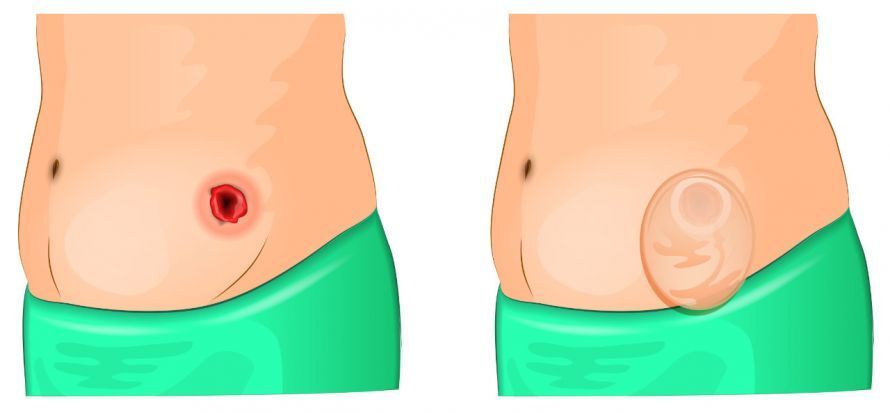
What types of artificial intestinal openings are there?
Depending on which section of the intestine is involved, there are different types of stomas.
The two most common types of stomas are:
- the ileostomy (small intestine stoma) and
- the colostomy (large intestine stoma)
With an ileostomy, doctors divert the small intestine to the outside of the body. With a colostomy, a connection is created between the large intestine and the abdominal wall. The colostomy is the most common type, accounting for 70 percent of cases.
When is an artificial bowel outlet necessary?
Cancer is the most common cause of a permanent stoma.
In cases of colon cancer, doctors often have to surgically remove part of the colon or the anal sphincter. In these cases in particular, a stoma is mandatory.
However, other circumstances can also make a temporary or permanent artificial bowel outlet necessary.
These include:
- Chronic inflammatory bowel diseases (such as Crohn’s disease or ulcerative colitis)
- Congenital abnormalities of the bowel
- Impaired sphincter function
- Inflammatory outpouchings of the intestinal lining (diverticulitis)
- Intestinal perforation
- Injuries to the intestine
- Polyps in the large intestine
- Tumor
How is a colostomy created?
Before the surgery, the doctor explains the procedure and its potential risks to the patient in detail. The doctor marks the future location of the stoma on the skin. The surgery is performed under general anesthesia.
There are two different methods for creating a colostomy:
- the terminal stoma and
- the double-barrel stoma
The doctor usually opts for a terminal stoma when a permanent stoma is required.
During the surgery, doctors remove the diseased section of the intestine. They then bring the healthy portion to the artificial opening in the abdominal wall. They secure the upper loop of the intestine to the abdominal wall with sutures.
Doctors often create a double-lumen stoma as a temporary treatment. This may be done to protect certain sections of the intestine following surgery.
With a double-lumen stoma, the surgeon brings the intestinal loop through the abdominal wall to the body’s surface. The surgeon then cuts open the loop, creating two openings, which are secured side by side to the abdominal wall with sutures.
Bowel movements can only pass through the upper loop of the intestine. Doctors can reverse the double-lumen stoma after a few weeks or months. To do this, the two openings of the intestinal loop are sutured back together.
What complications can occur?
With regular stoma care, the risk of complications is very low.
A common complication is what is known as a parastomal hernia. This is a herniation around the stoma through which the abdominal wall bulges outward. If the herniation is severe, surgery is required to close the hernia.
Other possible complications of an artificial bowel outlet include:
- Allergic reactions of the surrounding skin (abscesses, eczema)
- Skin inflammation
- Bleeding
- Impaired wound healing
- Intestinal prolapse (protrusion of a section of the intestine through the abdominal wall)
- Intestinal retraction (a section of the intestine pulling back under the skin)
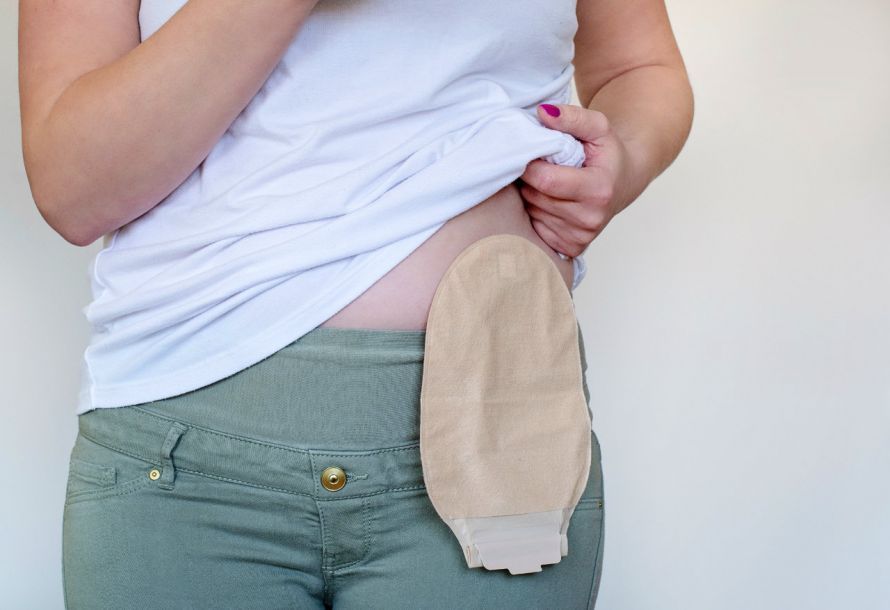
A colostomy is safe and can be worn very discreetly © Martina | AdobeStock
Is it possible to live a carefree life with a colostomy?
Many people initially feel ashamed of their colostomy and fear major limitations in their daily lives.
Over time, patients usually find that, despite having a colostomy, little in their lives actually changes. They can continue to engage in all activities, including sports and sexual activity.
Talking with others in a support group can be very helpful. Stoma therapists are available to assist patients both before and after surgery. They provide guidance on managing the stoma and answer patients’ questions.
When it comes to nutrition, patients with an enterostomy do not need to follow a specific diet. They should experiment to find out which foods they tolerate best.
If they experience bloating, constipation, or diarrhea, they should determine which foods they tolerate best. Chewing food thoroughly and eating smaller, more frequent meals can help reduce digestive problems.
Odors do not escape through the ostomy bag, as the bags contain a charcoal filter that neutralizes odors. In cases of bloating, only gurgling sounds may be audible.
Specialty medical stores offer a wide range of assistive devices and even special clothing for people with an ostomy.
For example, special swim belts are available that cover the stoma, allowing those affected to go swimming without feeling self-conscious.
The goal of care is always to improve quality of life.
FAQ
Can a stoma be reversed?
Yes—in the case of a temporary, double-barrel stoma, doctors can reverse the stoma once the affected section of the intestine has healed.
What happens in the event of a stoma hernia?
A so-called parastomal hernia is the most common complication. If there is a risk of a stoma hernia, the abdominal wall around the stoma bulges outward—in severe cases, surgery is necessary.
Are there aids for everyday life?
Yes—there are aids such as special belts for swimming, stoma caps, or discreet clothing that conceal the stoma in everyday life and improve comfort.
Can I play sports with a stoma?
Yes, many people with stomas are physically active. You should only consult your doctor before participating in certain contact sports.

About the medical author
Prof. Robert Ehehalt
Medical Author · Internist,Gastroenterologist · Heidelberg
Prof. Dr. med. Robert Ehehalt – medical author: expert articles, professional insights and medical knowledge in the Leading Medicine Guide.
More about the medical author →