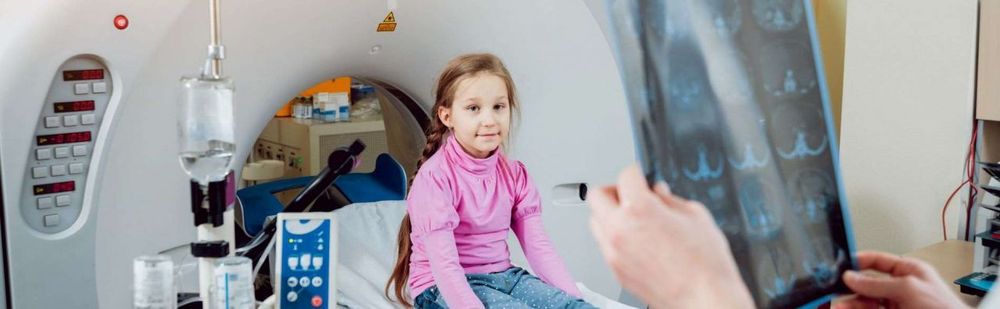
Neurosurgery is a relatively new medical specialty. It focuses on the diagnosis and surgical treatment of diseases, injuries, and malformations of the nervous system—primarily the brain and spinal cord.
Pediatric neurosurgery is an interdisciplinary field due to the unique characteristics of children. Depending on the condition, neurosurgeons, pediatricians (doctors specializing in children and adolescents), pediatric surgeons, neonatologists, oral and maxillofacial surgeons, pediatric orthopedists, and pediatric oncologists may be involved.
Key Areas of Treatment in Pediatric Neurosurgery
Pediatric neurosurgery deals with the diagnosis and surgical treatment of injuries, diseases, and malformations of:
- the central nervous system (and its protective structures) and
- the peripheral nervous system
The most common condition in pediatric neurosurgery is pediatric hydrocephalus, also known as “water on the brain.”
This is a pathological change in the balance of cerebrospinal fluid in the brain, which can result from various causes.
Another common condition in pediatric neurosurgery is traumatic brain injury. It is often caused by an external force during an accident or by excessive shaking of the child (shaken baby syndrome).
Brain tumors are the most common tumors in childhood. Surgery for these is typically performed by an experienced pediatric neurosurgical team.
Other conditions treated by pediatric neurosurgery include, for example:
- Microcephaly (reduced head circumference)
- Encephaloceles (defects, for example in the skull, through which brain tissue can protrude outward)
- Tethered cord (a condition in which the spinal cord is tethered)
- Cysts in the spinal cord
- Spina bifida (spinal clefts, neural tube defect, also known as “open back”)
Spina bifida occulta is a spinal malformation that cannot be detected by imaging. It may involve incomplete closure of the posterior vertebral arches without clinical significance.
Complex malformations in the spinal cord region are also possible, such as:
- Chiari malformations (prolapse of cerebellar tissue into the spinal canal)
- Craniosynostosis (premature fusion of the cranial sutures)
- Malformations of the blood vessels in the brain and spinal cord
- Tumors in the spinal cord
- Epilepsy
- Spasticity
- Dystonic movement disorders
- Peripheral nerve injuries
- Birth-related nerve damage
- Infections of the central nervous system and surrounding structures
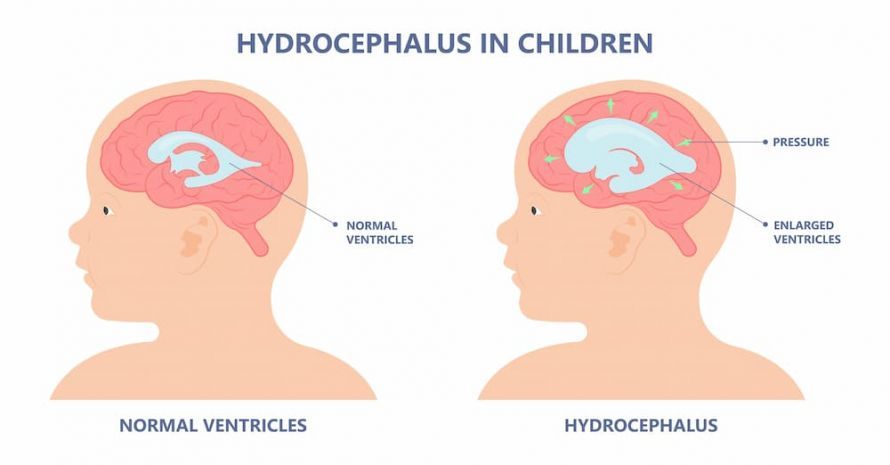 In about 1 out of every 1,000 cases, a baby is born with hydrocephalus @ Pepermpron /AdobeStock
Diagnostic Procedures in Pediatric Neurosurgery
Precise diagnosis is essential for the optimal treatment of children with neurosurgical conditions.
Neurosurgeons work closely with radiologists to perform the diagnosis and subsequently plan treatment. Depending on the type of condition, they also consult with other specialists.
Specialties with which pediatric neurosurgery frequently collaborates include:
- Pediatrics
- Pediatric surgeons
- Oral and Maxillofacial Surgeons
- Pediatric orthopedists
- Pediatric oncologists
Examinations and consultations are conducted:
- endocrinological (hormone testing)
- microbiological (testing for bacteria, yeasts, and viruses)
- virological (assessment of a viral infection)
- histological (examination of tissue changes under a microscope)
In addition, numerous imaging techniques are available:
- Radiography (conventional X-ray)
- Ultrasound examinations (sonography)
- Angiography (an X-ray procedure for examining arteries and veins using contrast agents)
- CT (computed tomography)
- MRI (magnetic resonance imaging), functional MRI
- MRA (magnetic resonance angiography)
The following procedures are also part of a pediatric neurosurgeon’s diagnostic repertoire:
- EEG (electroencephalography)
- Neurological examinations (such as motor and sensory tests) as well as
- Neurophysiological procedures (e.g., evoked potentials, measurement of nerve conduction velocities, electromyography)
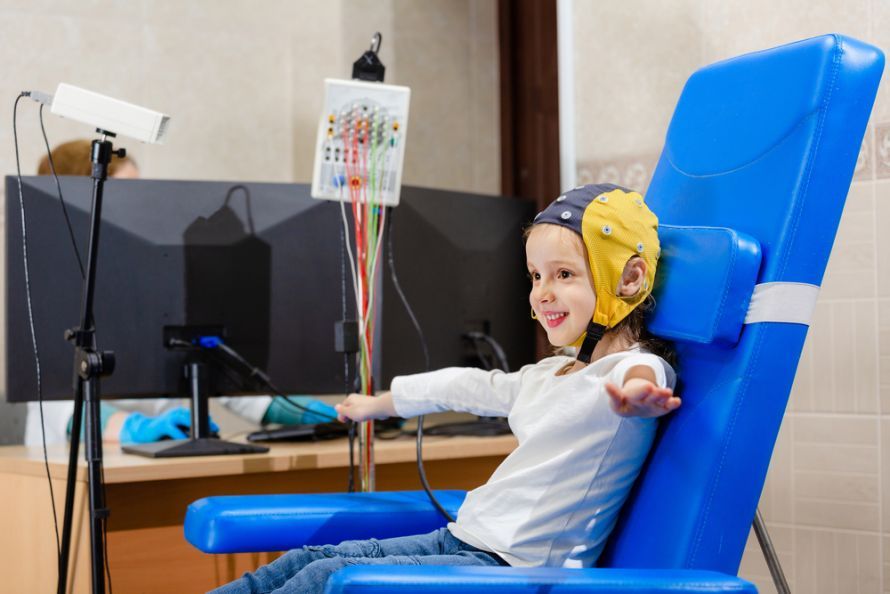 The EEG is a diagnostic method for recording brain waves @ ShunTerra /AdobeStock
Treatment Options for Neurosurgical Conditions in Children
Neurosurgery in general, and pediatric neurosurgery in particular, is a modern medical specialty. Due to anatomical considerations and the immense importance of nervous tissue for humans, surgeons must meet high professional standards.
State-of-the-art techniques support neurosurgeons, such as:
- Surgical microscopy
- Neuronavigation
- Intraoperative neuromonitoring and
- Intraoperative ultrasound
The operating rooms are equipped with state-of-the-art technology. By combining minimally invasive endoscopic techniques, healthy nerve tissue can be spared during the procedure. This reduces the risk of surgery-related functional deficits.
Surgeries for vascular malformations, congenital anomalies, or tumors are performed using microsurgical techniques.
Surgical treatment is followed by close follow-up care. This is typically carried out in collaboration with the affiliated pediatric hospital as well as with other specialists.
Pediatric Neurosurgeons – What Training Do They Need?
There is no such thing as a “pediatric neurosurgeon.” Pediatric neurosurgery is typically performed by neurosurgeons who have specialized in the treatment of infants, children, and adolescents.
To practice as a specialist in neurosurgery, a completed medical degree is required. After medical school, residents undergo 72 months of specialized training.
This training leads to the attainment of specialist certification. During this time, the aspiring neurosurgeon must perform a specified number of diagnostic procedures and treatments.
Training to become a neurosurgeon focuses on acquiring knowledge, experience, and skills in the following areas:
- Diagnosis
- Surgical, perioperative, and conservative treatment options
- Follow-up care and rehabilitation for diseases, injuries, and their consequences
- Neurosurgical procedures
Neurosurgical procedures include:
- Surgery on peripheral and autonomic nerves (nerve transposition and suturing, tumor removal)
- Spinal surgeries (e.g., treatment of spinal injuries)
- Surgery for traumatic brain injuries
- Surgeries for brain and spinal cord tumors
- Surgeries for skull, brain, and spinal cord malformations
- Surgery for pain syndromes
Working with children requires sensitivity and empathy toward the children themselves, as well as toward their parents’ concerns and fears.

About the medical author
Dr. Claus Puhlmann
Medical Author · Medical journalist
Dr. Claus Puhlmann – medical author: expert articles, professional insights and medical knowledge in the Leading Medicine Guide.
More about the medical author →Sources
- Bächli H., Lütschg J., Messing-Jünger M. (eds) Pädiatrische Neurochirurgie. Springer, Berlin
- Berger S., Bartenstein A. (2018) Schädel-Hirn-Trauma bei Kindern und Jugendlichen. In: von Schweinitz D., Ure B. (eds) Kinderchirurgie. Springer Reference Medizin. Springer, Berlin
- Bundesärztekammer (2013) (Muster-)Weiterbildungsordnung 2003 in der Fassung vom 28.06.2013. https://www.bundesaerztekammer.de/fileadmin/user_upload/downloads/20130628-MWBO_V6.pdf
- Fleischhack G., Pajtler K., Tippelt S. (2019) Tumoren des Gehirns und des Spinalkanals bei Kindern und Jugendlichen. In: Hoffmann G., Lentze M., Spranger J., Zepp F., Berner R. (eds) Pädiatrie. Springer Reference Medizin. Springer, Berlin
- Lütschg J. (2018) Neurologische Untersuchung von Neugeborenen, Kleinkindern und Jugendlichen. In: Bächli H., Lütschg J., Messing-Jünger M. (eds) Pädiatrische Neurochirurgie. Springer, Berlin
- Lütschg J. (2018) Neurophysiologische Untersuchungen. In: Bächli H., Lütschg J., Messing-Jünger M. (eds) Pädiatrische Neurochirurgie. Springer, Berlin
- Messing-Jünger A.M. (2018) Unterschiede zwischen Erwachsenen- und Kinderneurochirurgie. In: Bächli H., Lütschg J., Messing-Jünger M. (eds) Pädiatrische Neurochirurgie. Springer, Berlin