A shoulder prosthesis is a modern joint replacement used to treat advanced shoulder osteoarthritis, irreparable damage to the rotator cuff, or severe limitations in range of motion. The goal of the surgery is to reduce pain, improve the mobility of the shoulder joint, and significantly enhance patients’ quality of life.
Depending on the patient’s anatomy, the condition of the tendons, and the extent of the damage, different types of prostheses—such as the anatomical or inverse shoulder prosthesis—are used. The decision to perform shoulder replacement surgery is always made following a thorough evaluation by a specialized orthopedic surgeon.
Modern implants and a structured postoperative care plan now enable excellent functional outcomes.
Various Causes of Shoulder Pain
The shoulder joint is a highly versatile joint that allows the arm to move in all directions. It connects the head of the humerus to the scapula. However, the bones of the joint merely provide the foundation for these movements.
Not all shoulder pain is caused by joint wear and tear. When it comes to shoulder pain, the main culprits are
- the muscles,
- ligaments, and
- the joint capsule
play a key role. Therefore, in cases of pain or injury in the shoulder area, a thorough evaluation of the soft tissues must always be performed. Tendon tears and degeneration are particularly common in older adults. A doctor must identify and properly treat such injuries.
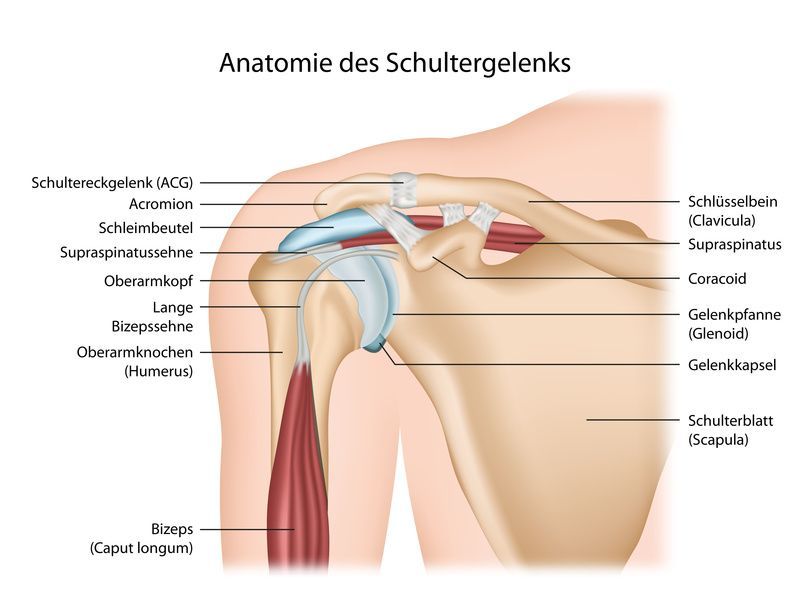
It is estimated that more than 50% of patients over the age of 70 have rotator cuff tears. The rotator cuff consists of tendons that move the shoulder. These tears and damage to the rotator cuff can lead to
- pain during movement,
- pain at rest, and
- limited range of motion
. Shoulder impingement syndrome may also be responsible for the symptoms. This must be investigated.
Joint-Preserving Treatment for Shoulder Pain
In mild cases, conservative treatment with physical therapy and medication may be sufficient. Arthroscopic surgery on the shoulder can also resolve some conditions or disorders and relieve pain. Arthroscopy is an option, for example, for
- reconnecting torn tendons,
- widening the space under the acromion, or
- stabilizing dislocated shoulders.
Many older adults also suffer shoulder fractures as a result of falls. The cause is often osteoporosis, a condition in which bones gradually lose calcium and become porous.
In such cases, in addition to conservative treatment, internal fixation with a pin or plate may be necessary. However, artificial shoulder joints are also increasingly being implanted in older patients. This decision should be made early on to prevent joint stiffness. Wear and tear of the shoulder joint is referred to as shoulder osteoarthritis (omarthrosis).
How often is an artificial shoulder joint implanted?
Compared to knee and hip replacements, artificial shoulder joints are implanted less frequently. The shoulder joint is not weight-bearing. Degenerative changes therefore become apparent later and can be better compensated for.
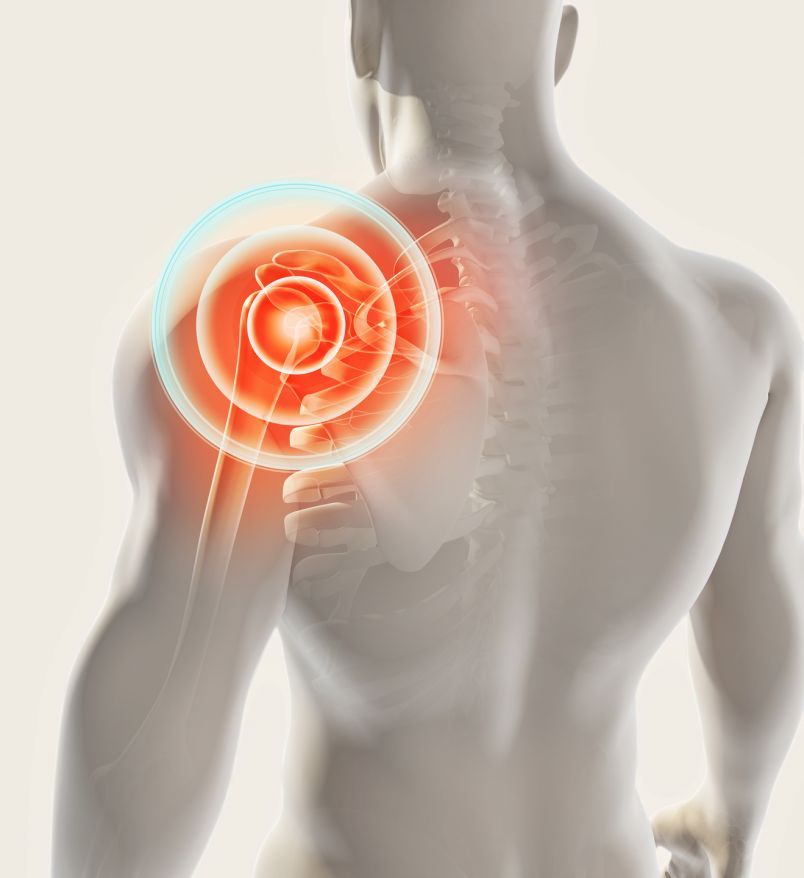
Shoulder pain can significantly impair quality of life © yodiyim / Fotolia
In 2020, approximately 30,000 shoulder prostheses were implanted in Germany. This number has doubled compared to 2003, when approximately 15,000 shoulder prostheses were implanted. The rising number of shoulder replacement surgeries reflects the growing need and improved technology in this field. These figures may fluctuate and change over time. For more up-to-date data, consult the latest available information from medical authorities or professional journals.
When is a shoulder replacement necessary?
A shoulder replacement is the last resort to enable the patient to return to a normal life. This option is considered when conservative and arthroscopic procedures can no longer alleviate the symptoms. In most cases, wear and tear in the shoulder joint has progressed too far.
Before surgery, it is important to discuss which type of artificial shoulder joint offers the best prospects for recovery. The doctor always makes this decision together with the patient.
Everything you need to know about surgical treatment of the shoulder joint and the types of shoulder replacements (anatomical and reverse prostheses)
Shoulder surgery to implant a shoulder prosthesis
Specialists in shoulder prostheses are orthopedic and trauma surgeons who have acquired special qualifications and experience in shoulder arthroplasty. A range of shoulder prostheses is available, which can be implanted depending on the severity of the damage.
Anatomical Shoulder Prosthesis
The preferred approach would be the least invasive procedure possible, i.e., artificial replacement of the humeral head. This is referred to as a partial prosthesis.
Numerous studies show that such a partial replacement is only appropriate if the shape and surface of the shoulder socket are still intact. Otherwise, a total replacement is necessary. In a total replacement, both bony joint components are replaced.
If the damage is more advanced, the partial replacement must be combined with a polyethylene glenoid cup. The glenoid cup is then often cemented in place. This decision must be made by an experienced surgeon and discussed with the patient.
In cases of more extensive damage to the rotator cuff, it must be determined whether muscle or tendon grafts or repairs are still possible. Otherwise, the only option is to implant an inverse shoulder prosthesis.
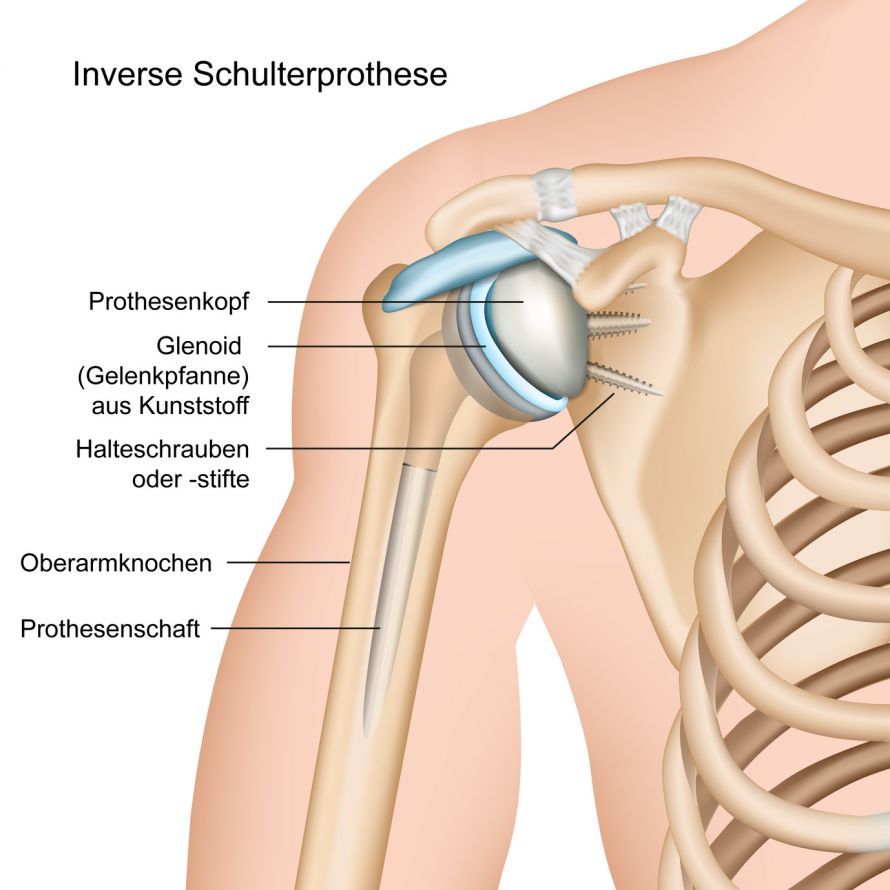
Inverse Shoulder Prosthesis
This shoulder prosthesis is used when the rotator cuff is damaged. A prerequisite for this is that the deltoid muscle outside the shoulder is still strong enough.
The inverse shoulder prosthesis has seen the highest growth rates in recent years. It also demonstrates good to very good results in the medium and long term. If this prosthesis fails, treatment options are limited. Therefore, it is primarily implanted in patients over the age of 70.
What happens after the implantation of an artificial shoulder joint?
Special pain catheters help manage postoperative pain. Most artificial shoulder joints can be mobilized and moved early on. The patient must avoid straining the shoulder by carrying or lifting heavy objects for some time. They should carry weights of no more than two to three kilograms. Especially with inverse shoulder prostheses, the patient must not lean on the arm to prevent the prosthesis from becoming loose.
Follow-up care for a shoulder prosthesis includes
- physical therapy,
- motor splint therapy,
- massage and lymphatic drainage,
- cold therapy, and
- pain management
Treatment can usually be continued on an outpatient or inpatient basis following an inpatient stay of approximately one week. In consultation with the surgeon, the patient should attend regular follow-up appointments, which include X-rays and clinical examinations.
Shoulder Replacement and Sports
After shoulder replacement surgery, avoid sports that involve impact or pressure on the joint. Possible options include
- swimming,
- cycling, and
- lighter physical activities such as Nordic walking or golf.
In general, be as careful as possible when putting weight on your shoulder. This is particularly important if you have had a glenoid implant or an inverse shoulder replacement.
Prognosis for Healing After Shoulder Replacement Surgery
Anatomical and inverse prostheses have a clinical 10-year survival rate of approximately 90%.
Conclusion
The anatomical shoulder prosthesis is particularly appropriate when the rotator cuff tendons are intact, the rotator cuff itself is intact, and good function is to be achieved, whereas the inverse shoulder prosthesis is primarily used in cases of severe damage to muscles and tendons.
Whether a shoulder prosthesis is necessary—and when a shoulder prosthesis or an artificial shoulder joint is required—is determined after exhausting conservative treatments, based on X-rays, and taking the individual’s specific situation into account.
During surgery, various types of shoulder prostheses are available; with the anatomical prosthesis, an artificial socket is implanted, whereas with the reverse variant, the joint’s pivot point is altered, thereby realigning the pivot. Mobilization begins as early as the first day after surgery and continues throughout the first few days, so that many patients experience pain relief and a return to daily life despite severe pain.
Six weeks after surgery—and even months later—patients often demonstrate good function following proper surgical treatment by shoulder prosthesis specialists, even in old age. The fact that the inverse prosthesis is a sensible option in certain cases is demonstrated by the fact that the artificial shoulder joint is specifically adapted to the patient’s anatomy and provides long-term stability.
FAQ
When is a shoulder replacement necessary?
A shoulder prosthesis is necessary when conservative treatments no longer provide sufficient pain relief and mobility of the shoulder joint is severely limited. Common causes include shoulder osteoarthritis, omarthrosis, or severe tendon damage.
What is the difference between an anatomical and an inverse shoulder prosthesis?
The anatomical shoulder prosthesis mimics the natural structure of the shoulder joint and requires an intact rotator cuff. The inverse shoulder prosthesis is used when the tendons are irreparably damaged and shifts the joint’s pivot point.
How is shoulder replacement surgery performed?
The surgery is performed under general anesthesia and typically lasts one to two hours. During the procedure, the humeral head and glenoid cavity are replaced with implants that are anchored in the bone either with cement or cementlessly.
How long does rehabilitation take after shoulder replacement surgery?
Follow-up care begins in the first few days after surgery. Physical therapy over several weeks is crucial for gradually restoring mobility, strength, and shoulder function.
Are you pain-free after a shoulder replacement?
Many patients report a significant reduction in pain or complete freedom from pain after shoulder replacement surgery. However, the outcome depends on the initial condition, the type of prosthesis, and consistent rehabilitation.

About the medical author
Prof. Felix Zeifang
Medical Author · Manager
Prof. Dr. med. Felix Zeifang – Author: Discover expert medical articles at Leading Medicine Guide.
More about the medical author →Sources
- Deutsche Vereinigung für Schulter- und Ellenbogenchirurgie e. V.
- Garving C et al., Impingementsyndrom der Schulter. Dtsch Arztebl Int 2017; 114(45): 765-76; DOI: 10.3238/arztebl.2017.0765
- flexikon.doccheck.com/de/Schulterschmerz