Knee pain is one of the most common musculoskeletal complaints and can severely impair the knee joint. The causes of knee pain range from acute injuries to chronic osteoarthritis (gonarthrosis). Knee pain is particularly common when bending the knee, climbing stairs, or running.
The kneecap, tendons, ligaments, or joint cartilage are often affected. Overuse during sports, misalignments such as bowlegs or knock-knees, and inflammation in the joint can also cause knee pain. Typical symptoms include swelling, limited mobility, and discomfort when standing up from a squatting position. Early treatment of your knee pain and targeted preventive measures can help avoid knee problems in the long term.
Knee Pain and What Might Be Causing It: The Main Causes
The knee joint is involved in nearly all leg movements. It is therefore hardly surprising that overexertion is one of the most common causes of knee pain. This applies regardless of age, as even children occasionally suffer from pain in the knee area, which can be attributed, among other things, to excessive strain. Athletes may develop what is known as “jumper’s knee,” which orthopedists also refer to as patellar tip syndrome. Active people, in particular, sometimes suffer a tear in the meniscus or a cruciate ligament while playing sports.
Watch the following video for a brief overview of the anatomy of the knee joint:
In older age, knee pain is often the result of wear and tear (osteoarthritis). Since the knee joint is used intensively, it is particularly susceptible to wear and tear. Signs of wear and tear usually do not appear until middle age. However, this is not necessarily the case. Depending on an individual’s physical condition and lifestyle, wear and tear in the knee joint can become noticeable much earlier—for example, following an accident or a severe knee injury sustained at a young age.
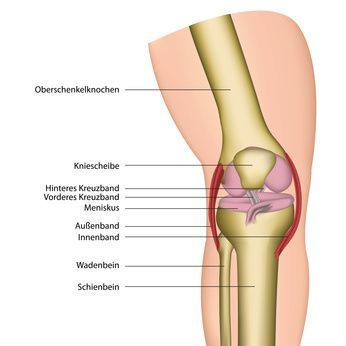
Sometimes, knee pain can also be a symptom of an inflammatory condition, such as rheumatism. Patients usually also experience pain in other joints (e.g., the fingers) and often report morning stiffness in their hands. A feeling of fatigue and fever are also sometimes accompanying symptoms; the knee joints often swell in cases of inflammatory disease.
However, it is also possible that the knee is “reacting” to another condition that has nothing to do with the joints. This can occur, for example, a few weeks after an infection (gastrointestinal, flu-like, viral, etc.). According to current medical understanding, this is referred to as reactive arthritis.
In addition, metabolic disorders or blood disorders such as gout or hemochromatosis can also affect the function of the knee joint.
An overview of selected causes of knee pain:
- Overuse, e.g., due to intense training or being overweight
- Leg misalignments (bowlegs and knock-knees)
- Sinding-Larsen-Johansson syndrome (jumper’s knee or patellar tip syndrome)
- Degenerative changes: osteoarthritis
- Rheumatism
- Arthritis
- Knee injuries, e.g., meniscus tear
- Metabolic disorders
- Bursitis with swelling and redness, such as a Baker’s cyst
- Joint effusion
Symptoms: How pain in the knee joint manifests itself
Medical professionals classify pain into acute and chronic categories. While acute pain subsides within a few days or hours, chronic pain lasts six weeks or longer. In the knee joint, pain can occur both during movement and at rest. While conservative treatment can provide temporary relief from chronic knee pain, relapses are not uncommon. Rheumatic diseases, in particular, often lead to recurring flare-ups of pain.
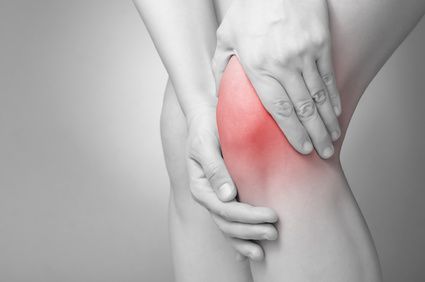
Knee pain can be sharp, shooting, and occur only during physical activity. Other injuries manifest as throbbing, dull, persistent pain, even at rest or at night. Depending on the cause, the knee may hurt when bending, straightening, or rotating. Your doctor can use this information to determine the possible cause of the knee pain.
The Diagnosis: Movement Tests and Imaging Procedures
Since knee pain can have various causes, a careful diagnosis is extremely important. This begins with taking a medical history (anamnesis). For this, the patient provides a detailed account of current and past symptoms. In addition, the location of the pain is determined and its intensity assessed. Even at this stage, an experienced orthopedic surgeon can form initial suspicions and rule out potential causes.
The medical history is followed by a comprehensive physical examination. Naturally, the focus here is on the knee joint. Most doctors begin by palpating the knee. This helps identify tender points and swelling. They also check whether the kneecap can be moved.
Furthermore, various movement tests can be helpful for diagnosis. These are used by orthopedic surgeons and sports medicine specialists to differentiate between various clinical presentations. It is also common to measure the circumference and length of the leg axes as well as the position of the foot.
In addition to a consultation and a thorough examination, the use of imaging techniques may be appropriate depending on the symptoms. Ultrasound examinations (sonography), X-rays, and computed tomography (CT) and magnetic resonance imaging (MRI) provide important information about the condition of the knee. In some cases, it is necessary to perform a nuclear medicine examination (scintigraphy). Only in rare cases do doctors order a joint aspiration or arthroscopy. The video shows how knee arthroscopy is performed:
What can be done? The most important treatment methods
Generally, a distinction can be made between conservative treatment methods and surgical procedures:
- Conservative therapy focuses on temporarily resting the knee joint. The goal is for the joint to heal on its own through reduced stress. Patients can follow the RICE protocol. According to this, the first aid for knee pain is rest, ice packs for cooling, compression—that is, gentle pressure to reduce swelling and bruising—and elevating the affected leg. A mild pain reliever that also reduces inflammation is usually prescribed for a short period.
- Physical therapy is used as a complementary treatment. It helps strengthen the muscles and thus promotes healing. If physical therapy has been prescribed, assistive devices such as knee braces, crutches, canes, or orthotics are used.
- Knee surgery is considered the treatment of choice when conservative treatments are no longer effective. Thanks to advances in modern medicine, many joint-preserving procedures (e.g., meniscus surgery, cartilage transplants, cruciate ligament surgery) can be performed using minimally invasive arthroscopic techniques, resulting in incisions only a few millimeters in size. If the cartilage damage is extensive and the joint surface needs to be replaced, traditional open surgery (arthrotomy) is performed. Here, too, surgical techniques have been refined, and a skilled surgeon can employ surgical procedures that are particularly gentle on the muscles. The most common knee surgeries include knee replacement, cartilage treatments, and ligament reconstructions. Knee replacement should only be considered after all conservative treatment options have been exhausted. You may also want to consider seeking a second opinion at a center that specializes in such procedures (“Maximum Care Endoprosthesis Center,” database available at: endoMap—Database for Certified Endoprosthetics Centers according to EndoCert). The procedure is particularly precise when computer-assisted surgery (navigation, robotics) is used.
FAQ
What are the most common causes of knee pain?
Knee pain can have various causes. Symptoms often result from osteoarthritis, knee osteoarthritis, overuse during sports, or knee injuries such as torn cruciate ligaments and meniscus tears. Inflammation, misalignment, or bursitis in the knee joint are also among the common causes.
Why does knee pain occur when bending the knee?
Knee pain when bending is often caused by irritation of the kneecap, damage to the articular cartilage, or problems with tendons and ligaments. Pain in the area of the kneecap often intensifies, especially when climbing stairs or standing up from a squatting position. Wear and tear in the patellofemoral joint can also cause symptoms.
When should you see a doctor for knee pain?
If you experience severe knee pain, noticeable swelling, or limited mobility, you should see a doctor. Acute pain that occurs after an accident or during sports may indicate cruciate ligament, ligament, or meniscus injuries. Chronic knee pain should also be evaluated.
How can you prevent knee pain?
Knee pain can be prevented through regular exercise, strong tendons and muscles, and avoiding improper strain on the joints. Choosing the right sport, maintaining a healthy body weight, and engaging in joint-friendly training help reduce joint wear and tear and knee osteoarthritis. Bending and straightening the knee correctly in everyday life also reduces strain on the knee joint.
What treatments help with knee problems?
Treatment depends on the cause of the knee pain. Rest and cooling help with inflammation, while physical therapy and exercise are often beneficial for osteoarthritis. Problems with the patella, tendons, and ligaments can be treated conservatively. In severe cases of damage or osteonecrosis, surgery may be necessary.
Share this article